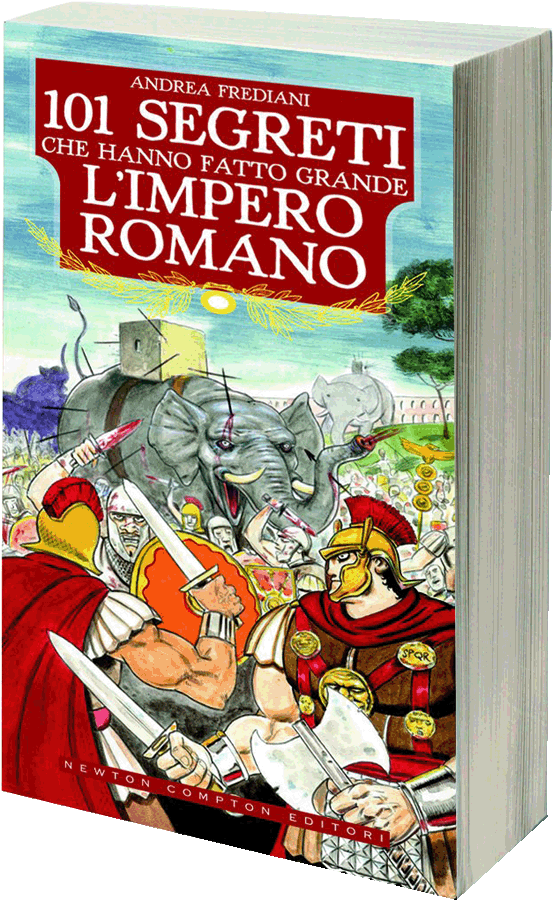
I 101 SEGRETI CHE HANNO FATTO GRANDE L'IMPERO ROMANO
I soldati romani non portavano sempre uno scopettone in testa. Cesare non disse mai: «Il dado è tratto». Le matrone facevano mettere le parrucche perfino alle statue. L'irreprensibile Catone il Censore era un abile chef, soprattutto di dolci. Alcuni dei più grandi generali dell'esercito romano erano barbari. Roma aveva delle zone a traffico limitato, già a quei tempi. Le donne si mettevano sterco di coccodrillo come fondotinta. La morale sessuale romana era molto rigida. Le catacombe non erano rifugi per i cristiani perseguitati…
Ecco alcuni dei «segreti» della civiltà romana, qualche picconata ai luoghi comuni che, alimentati da film, documentari e testi giornalistici spesso superficiali e frettolosi, da troppo tempo si trascinano nell'immaginario popolare. E poi ci sono i segreti del successo di Roma antica: la forza delle legioni, l'ambizione e le intuizioni di certi grandi uomini, la bontà del modello confederativo, la tolleranza religiosa e il rispetto per gli dèi, i legami clientelari, le straordinarie opere di alta ingegneria.
Un campionario istruttivo di curiosità su Roma antica, su ciò che è andato perduto e su quanto ci è rimasto, nei costumi e nelle abitudini di una società — quella contemporanea — che deve a quella antica molto più di quanto si pensi. Ignorarlo sarebbe imperdonabile.
THE 101 SECRETS THAT MADE THE ROMAN EMPIRE GREAT
Roman soldiers didn't always wear a brush on their heads. Caesar never said «The die is cast». Matrons even had wigs put on statues. The austere Cato the Censor was a good cook, especially of desserts. Some of the greatest generals in the Roman army were barbarians. Rome had restricted traffic areas, even in those days. Women put crocodile excrement on their faces as a foundation cream. Roman sexual morality was very strict. The catacombs weren't refuges for persecuted Christians…
These are some of the «secrets» of Roman civilization — corrections to the clichés which, fostered by films, documentaries and newspaper articles often superficial and hastily written, have lingered for too long in the popular imagination. Then there are the secrets of ancient Rome's success: the strength of the legions, the ambition and intuitions of certain great men, the effectiveness of the confederative model, religious tolerance and respect for the gods, cliental ties, and the extraordinary works of high engineering. To overlook all this would be unforgiveable.
Here are some of the 101 secrets:
- That glutton Cato: the delicacies of a great chef
- Good hair: coiffures and wigs
- Pony Express: the imperial postal service
- Alternate numberplates? The restricted traffic areas
- There are houses and houses: the tenements of the poor and the mansions of the rich
- Olfactory delights: ointments and perfumes
- The impertinent barbarian: barbarian generals of the Roman army
- The man who wanted to make himself king: the secrets of Augustus
- All forbidden: the incomprehensible life of the priest of Jupiter
- The emperor's brothel: imperial and public whorehouses
- Extreme evils… Ritual sacrifices in battle
- Rome or death! Punishments and rewards in the army
- Cruises at the Colosseum: naval shows in the circus
- My name is Bond, James Bond: the emperor's secret agents
- Blunders on papyrus: books and publishing
- Tiberius the alcoholic: wine and winos
- Morning parades: clienteles and toadyism
- Bacchus, tobacco and Venus… The Bacchanalia